
News 08/17
Daily News Archives Since June 2026
Video: How climate change worsens heatwaves, droughts, wildfires and floods | BBC News
Video: How ‘Super El Niño’ Is Turbocharging Weather DisastersThis year’s ‘Super El Niño’ is already taking a heavy toll. From erratic rains in India to intense heat in Europe, weather extremes are threatening crops, supply chains, energy sources — and human life. As the world grapples with rising temperatures tied to global warming, this year may be a preview of how bad it will get in the not-too-distant future.
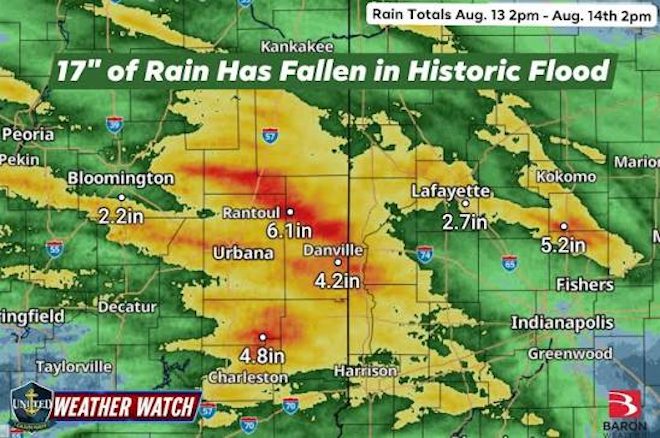
Video: 17 Inches of Rain — Record Flood!
Two nuclear-armed states have waged devastating wars on Iran based on the manufactured premise that the country is “on the brink” of possessing a nuclear weapon: Given that Israel has failed to achieve its war aims, it may resort to the Sampson Option (nuclear retaliation). Unlike the national security doctrine of Mutually Assured Destruction (MAD)—designed to deter a nuclear adversary from a first strike—under the Israeli Sampson Option, Tel Aviv would use nuclear weapons against a non-nuclear adversary to ensure its survival; if it believes it has run out of options. It is plausible, considering its ruthlessness, that Israel would be willing to use this last-resort strategy, even it meant taking the world down with it. — Iran’s Nuclear Shield: Life or Death
World Health Organization: New Report Finds Global Security Hinges on Climate Action, Health Investment and Peacebuilding Following July’s NATO summit, and with hostilities resuming in the US-Iran war after a 60-day ceasefire, a new report from the Global Climate and Health Alliance highlights the deep interlinkages between climate change and armed conflict, and how the intersection of these issues become mutually reinforcing drivers of harm to human health.
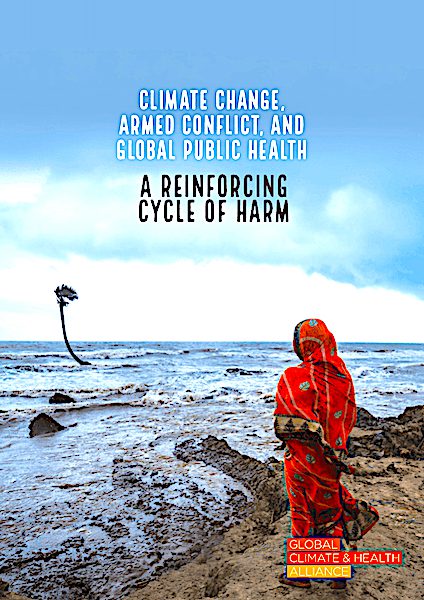
The report, Climate Change, Armed Conflict, and Global Public Health: A Reinforcing Cycle of Harm presents current evidence on the relationship between climate change and armed conflict, and its implications for global public health. The report finds that each such crisis does not occur in isolation but rather they converge in a polycrisis, a condition in which multiple global crises such as climate change, armed conflict, economic instability, under-resourced health systems, and an evolving digital landscape interact and amplify one another, generating a significant threat to global public health. “This report shows that from wildfires to wars, trying to address each of the elements of the polycrisis in isolation will impact the health of everyone, with the world’s most vulnerable people worst affected”, said Dr Courtney Howard, Board Chair of the Global Climate and Health Alliance, a consortium of more than 200 health professional and health civil society organisations and networks from around the world addressing climate change. “Increasing instability in Earth’s climate, oceans and biodiversity will continue to act as a threat multiplier, threatening human security worldwide”, continued Howard. “To pull out of this worsening climate-conflict spiral, humanity must shift from reacting to individual crises to systematically investing in strengthening the ecological, social, and institutional foundations of wellbeing. This can create reinforcing feedback that improves health, resilience, and peace together, as envisioned in the Paris Agreement and the Pact for the Future.”
World Health Organization: Climate ChangeClimate change is impacting human lives and health in a variety of ways. It threatens the essential ingredients of good health – clean air, safe drinking water, nutritious food supply and safe shelter – and has the potential to undermine decades of progress in global health.Between 2030 and 2050, climate change is expected to cause approximately 250 000 additional deaths per year from malnutrition, malaria, diarrhoea and heat stress alone. The direct damage costs to health are estimated to be between US$ 2–4 billion per year by 2030. Areas with weak health infrastructure – mostly in developing countries – will be the least able to cope without assistance to prepare and respond. Greenhouse gas emissions that result from the extraction and burning of fossil fuels are major contributors to both climate change and air pollution. Many policies and individual measures, such as transport, food and energy use choices, have the potential to reduce greenhouse gas emissions and produce major health co-benefits, particularly by abating air pollution. The phase out of polluting energy systems, for example, or the promotion of public transportation and active movement, could both lower carbon emissions and cut the burden of household and ambient air pollution, which cause 7 million premature deaths per year.
- Climate change is directly contributing to humanitarian emergencies from heatwaves, wildfires, floods, tropical storms and hurricanes and they are increasing in scale, frequency and intensity.
- Research shows that 3.6 billion people already live in areas highly susceptible to climate change. Between 2030 and 2050, climate change is expected to cause approximately 250 000 additional deaths per year, from undernutrition, malaria, diarrhoea and heat stress alone.
- The direct damage costs to health (excluding costs in health-determining sectors such as agriculture and water and sanitation) is estimated to be between US$ 2–4 billion per year by 2030.
- Areas with weak health infrastructure – mostly in developing countries – will be the least able to cope without assistance to prepare and respond.
- Reducing emissions of greenhouse gases through better transport, food and energy use choices can result in very large gains for health, particularly through reduced air pollution.
Many Americans Underestimate Health Risks of Extreme Weather, New Study Finds The research examines the “risk perception gap,” or the difference between climate-related mortality estimates and public perceptions of climate risk, across U.S. counties. A changing climate increases the health risks posed by extreme weather. However, according to the 2024 Yale Climate Opinion Maps, only 47% of U.S. survey participants believed that global warming would harm them personally. Poor risk communication can leave affected populations underprepared to face the health dangers that can accompany extreme heat and cold, flooding,wildfire smoke, and severe drought. Manware et al. compared mortality risk estimates with public perception of climate risk to establish “risk perception gaps.” They found that a belief in anthropogenic climate change was associated with smaller gaps between perceived and actual risk, suggesting that a greater public understanding of climate change could help communities better prepare for the health effects that come alongside extreme weather.
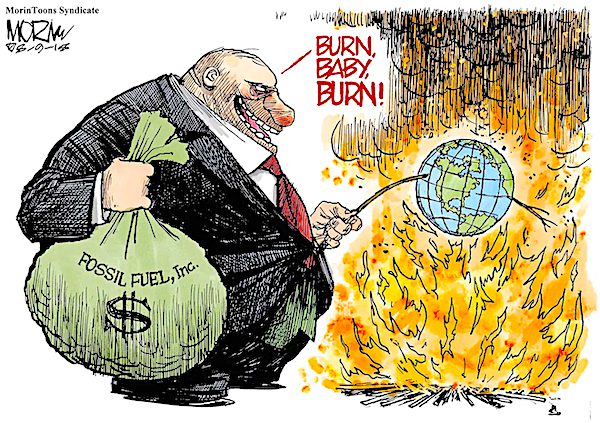
The Real ‘Global Warming Hoax’?: The Oil Industry Hoax!: Climate Change? The Oil Industry Knew! For Over 50 Years, the Oil Industry Knew the Connection Between Burning Fossil Fuels and Climate Change. : Defense, Denial, and Disinformation: Uncovering the Oil Industry’s Early Knowledge of Climate Change As early as 1959, oil industry executives understood the connection between burning fossil fuels and climate change. Soon thereafter, industry scientists confirmed beyond a reasonable doubt that the burning of fossil fuels contributed to anthropogenic climate change. In response, oil companies scrambled to promulgate climate change denial and disinformation in order to avoid government regulation. It was not until the late 1990s and early 2000s that oil companies began publicly acknowledging the scientific consensus on climate change and responded by promoting market-based solutions to mitigating emissions. Did they inform the public about the danger! As the World Warmed, rhey just went on producing their hazardous product! To them profits were more important than life! Their ecocidal decision is a criminal act against humanity and all life on the planet! ‘Law and Order’ capitalism protects them! A Sane Society World Hold the Oil Companies Accountable for Their Crimes!
Ecosocialism or Ecocide Today’s Threat of Global Warming! Bernie Sanders Poses as a Socialist Opposed to Oligarchry Rule (The Rule of the Few) — Not the Rule of the Capitalist Class! “The grim truth is that almost the entire political class aligns with the ultra-rich against the rest. There is one political problem from which all others follow. It is the major cause of Donald Trump, of Nigel Farage, of the shocking weakness of their opponents, of the polarisation tearing societies apart, of the devastation of the living world. It is simply stated: the extreme wealth of a small number of people. It can also be quantified. The World Inequality Report (WIR) 2026 shows that about 56,000 people – 0.001% of the global population – corral three times more wealth than the poorest half of humanity. They afflict almost every country. In the UK, for example, 50 families hold more wealth than 50% of the population combined.” — George Monbiot, Money Talks
Cleanup of Inactive Gulf of Mexico Wells Estimated at $30 Billion
Sent to Me by Email: Shadow Government Statistics 8/14/26 Commentary
US Imperialism: ‘Menace to the World’: With Iran Talks Stalled, Trump Vows to Declare Strait of Hormuz a US Territory
Ralf Nader: Corrupt Trump Makes $1.1 Million an Hour by Grifting the US People
Sent to Me by Email: Shadow Government Statistics 8/14/26 Commentary
HEADLINES (Real CPI 12.1%)
ShadowStats Broad Assessment of the U.S. Economy
Continues for an Intensifying/Deepening and
Explosively Inflationary Recession
The Related, Long-Pending Series of ShadowStats
Major Benchmarking Reviews Should Begin Next Week With:
(1) Analysis of Headline U.S. Consumer Price Index, Reporting Distortions, Biases and Related Inflation Estimation Measures (2) Review of the Latest and Closely Related, Highly Inflationary, Federal-Reserve Controlled Monetary Policy/Money Supply(3) U.S. Labor Conditions and Implied Economic Activity.Tied to U.S. Employment and Unemployment(4) Review of the Highly Gimicked and Inflated Headline Estimates of U.S. Economic Activity Including Employment and Gross Domestic Product ______
As Currently Headlined, and as Openly and Increasingly Suppressed
By the Bureau of Labor Statistics, Since 1980, June 2026 Year-to-Year CPI Inflation
Still Jumped to a 37-Month High of 4.3%Yet, Corrected for the Bureau of Labor Statistics’ Open Suppression of
Headline CPI Inflation Since the 1980s,
The ShadowStats June 2026 Alternate Year-to-Year CPI Jumped to a 37-Month High of 12.1%
The Planned Series of Benchmarked ShadowStats Commentaries
On U.S. Inflation, Fed Monetary Policy, the Economy and the
Financial Markets, Will Begin in the Week Ahead
My Apologies for the Delayed Start to These Series
Those Series and the Regular Economic Commentaries Should Follow,
Every Other Week, Encompassing U.S. Government Fiscal, and
Federal Reserve Monetary Policies, in Context of
Expected/Potential Economic Activity and
Financial Market Reactions
Such Will Include Full Reviews of Headline Reporting of
U.S. Employment, Gross Domestic Product and
Federal Reserve Activity, Including the Money Supply
The Onset of a Downturn in Headline U.S. Economic Activity
Already Is Underway and Should Continue to Intensify,
Amidst Coincident and Significant Upturns in Both the Headline and
Particularly in the Traditional, Consumer Price Index
The Price of Gold: Traditionally Moving with Actual Inflation,
Gold Price Fluctuations Should Continue to Spike Higher,
Along With the Accelerating Inflation Risks