
Daily News 11/03
Daily News 11/03
Daily News Archives Since June 20
( Yale Climate Connections ) – Who among us has not been at least momentarily awed by an image or video of a whale breaking through the ocean’s surface, connecting the sea and the sky in such a glorious, mammalian, and utterly alien way – a glimpse, if only for a moment, into another dimension of the world? Whales are some of the biggest and most majestic creatures on Earth, and scientists and conservationists say they are also climate heroes. During their lifetimes, they release enormous amounts of waste into the ocean that is rich in nitrogen, phosphorus, and other elements that nourish phytoplankton, which in turn release oxygen into the atmosphere while absorbing climate-warming carbon dioxide through photosynthesis. What’s more, the substantial amount of carbon in their massive bodies remains out of the atmosphere for their entire lifetimes and even centuries after they die. Yet as Earth’s oceans warm, these climate heroes need more protection from changes in habitat that have diminished their food supply and otherwise threaten their survival. — Why Whales are Climate Heroes – Who also need our Protection
A Plague of Kings amid Climate Breakdown I mean this is simply not the world I ever would have wanted to leave to my children and grandchildren.
Solar Farms In The Sahara Might Have An Unexpected Effect On The Global Climate When picturing the Sahara Desert, besides the endless sand, you’ll also imagine blue skies and a blazing sun. While it might seem like the perfect place for a vast solar farm, climate scientists found that building such facilities on a massive scale there could have significant consequences not only for the Sahara, but also for the climate thousands of miles away. A 2020 study investigated what might happen if huge solar farms, like those in Tibet, were built across the Sahara. Solar panels are darker than the Sahara’s pale sand, so panels would absorb more sunlight and affect how heat is exchanged between the land and the atmosphere. In the researchers’ model, the warming surface could alter air circulation, leading to more rainfall. Increased vegetation, as has also been observed around solar farms in China, could then reinforce the warming and wetter conditions. While that might sound like a welcome scenario for a part of the world known for its dry climate, the effects could extend far beyond the desert, with the model suggesting that changes in atmospheric circulation could make some regions around the world wetter and others drier. In fact, the model’s simulations suggested possible droughts and forest degradation as far away as the Amazon, along with rising global surface temperatures and Arctic warming that could contribute to further losses of sea ice. It should be noted, however, that these are modeled outcomes, and not certainties, and that the study examined hypothetical, extremely large solar installations (20% coverage of the Sahara). While solar power is an important tool for reducing greenhouse gas emissions, the research highlights the possibility that changing an enormous area of land to generate clean energy could create unexpected pressures on Earth’s climate.
Hottest year on record: bosses prepare for chaos and youth unrest stirs2026 is already set to be the hottest year on record so far, surpassing the record of 2024, which in turn had surpassed 2023. Europe, the world’s fastest-warming continent, was hit by four intense heatwaves this summer, coinciding with 35,000 ‘excess deaths’ above the average rate. According to the World Health Organisation, in Europe 175,000 people already die every year due to heat-related causes. The additional 35,000 figure actually underestimates the excess deaths this year, as it only includes half of Europe, and doesn’t include figures from August, the true figure is said to be much higher.
50 years for demonstrating? The outrage of the Prairieland persecutionsIt is no secret to anyone paying attention that the Trump régime is determined to stamp out political dissent as part of its bid to dismantle what formal democracy remains in the United States. And just because Donald Trump did leave office without being forcibly removed after losing the 2021 presidential election — likely due in part to temporarily losing his support after his attempt at a self-coup failed — the question of a peaceful transfer of power at the end of his second term must remain an open question.
US Attacks on Democratic Governments Include Our OwnThe mainstream media, particularly the New York Times and the Washington Post, still do not fully recognize the malicious role that the United States has played in interfering in foreign leadership succession, particularly in societies trying to establish democratic rule. Ignatius’ support for a covert U.S. role in regime change in Iran is particularly obtuse in view of the U.S. role in overthrowing the democratic regime in Iran in 1953, which is still a factor in the tension between the United States and Iran 73 years later. The Times belief that the United States has “grown more respectful” of democracies is particularly ironic in view of the steps that the Trump administration has taken to undermine democracy here at home. In the excellent book Regime Change by Times reporters Maggie Haberman and Jonathan Swan, Trump boasts that “no other president could do some of the shit I’m doing.” The “shit” that Trump is referring to includes the seizure and deportations of hundreds of thousands of law-abiding people and the imprisoning of tens of thousands more; launching a war against Iran with no word to the Congress or the American people; and attacking such key elements of our democracy as our universities, news networks, and prestigious law firms. In doing so, Trump has created a “constitutional autarchy” in the absence of a true democracy.
After Trump Tax Cuts, Major Corporations Pay Less than EverWho bears the cost of these giant companies paying such a pittance? The American people.
The Orwellian Nightmare of American Public Schools.
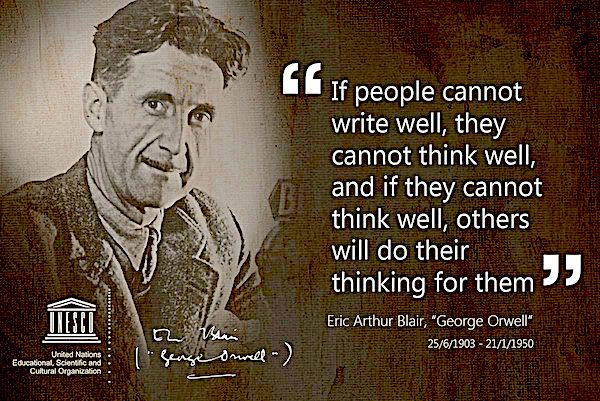
Politics after literacyWhat happens to political thought when written language loses ground to images, video, and algorithmic feeds?
National Literacy Instituete Literacy Statistics 2024-2025
- On average, 79% of U.S. adults nationwide are literate in 2024
- 21% of adults in the US are illiterate in 2024.
- 54% of adults have a literacy below a 6th-grade level (20% are below 5th-grade level).
- Low levels of literacy costs the US up to 2.2 trillion per year.
- 34% of adults lacking literacy proficiency were born outside the US
- Massachusetts was the state with the highest rate of child literacy.
- New Mexico was the state with the lowest child literacy rate.
- New Hampshire was the state with the highest percentage of adults considered literate.
The state with the lowest adult literacy rate was California. On average, 79% of U.S. adults nationwide are literate in 2024.
Where does the US rank in literacy?: The US ranks 36th in global literacy according to some sources, while others place it around 14th among industrialized nations in recent studies. Despite these conflicting rankings, a significant portion of the US population has low literacy, with some estimates suggesting over half of adults read below a sixth-grade level. This highlights a gap between overall literacy rates and the number of adults with low proficiency.
Will the AI Bubble Burst in the Face of the Working Class?The ultimate betrayal will be if AI succeeds in making America vastly wealthier while leaving working Americans with less economic security, less political power, and with the bill for another generation of financial speculation wiping out our retirement accounts.
A wave of radicalisation is sweeping through BrazilThe largest street protests in Brazil’s history, lasting three weeks, resulted in an unprecedented electoral turnaround that had been deemed almost impossible by virtually all analysts. Lula finished the first round 2.2 million votes behind Flávio Bolsonaro. In the second round, Lula finished 4.4 million votes ahead, even though Flávio Bolsonaro had increased his own vote tally by 3.7 million. Lula secured 10.4 million more votes in the second round, achieving 64.2 million votes, the highest vote tally in Brazilian history.Millions of young people and workers took to the streets immediately after the first round, and this radically changed the political situation. It was the working masses on the streets who defeated Bolsonaro – Trump’s candidate, the candidate of the so-called ‘financial markets’, the candidate of the American Big Tech companies, of the major private Brazilian media outlets, and of the majority of the national bourgeoisie.
Beyond Netanyahu: What Israel’s Election means for Palestinians The world cannot allow a future Israeli government to present itself as a peacemaker, or sell the illusion of a newly reformed Israel