
Daily News 11/01
Daily News 11/01
Daily News Archives Since June 20
Black People To March On The White House

Declaring “25 Years Since Durban, We Comin’ For That Check. $131 Trillion, Reparations Now!” On Saturday, October 31, the Black is Back Coalition for Social Justice, Peace and Reparations will lead a march from Malcolm X Park to the White House to demand reparations. The march will be preceded by a gathering on Friday, October 30 at One DC Black Workers Center, and followed by a conference on Sunday, November 1 at Arlington Court Suites Hotel. The 3-day mobilization marks the 25-year anniversary of the 2001 United Nations World Conference against Racism, Racial Discrimination, Xenophobia and Related Intolerance, held in Durban, South Africa. At that historic conference, the nations of the world resolved to support the demand for reparations for slavery and colonialism. The U.S. and Israel were alone in their opposition.
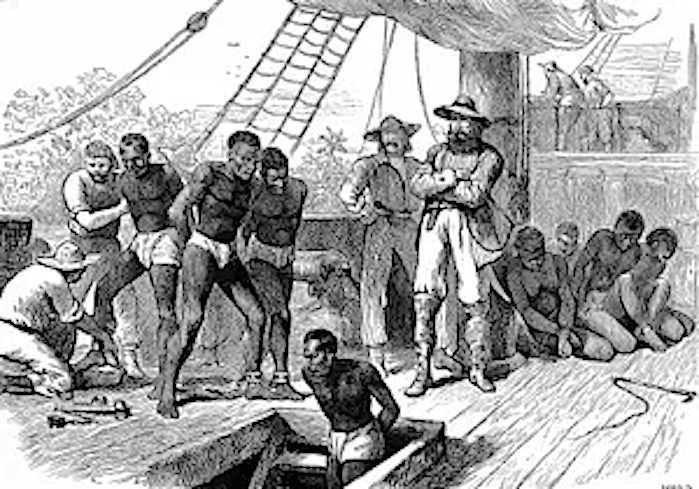
The World Conference on Racism held in Durban, South Africa, several years ago, not only raised the issue of Israel as an apartheid state, but also raised the issue of reparations for the colonialized world due to centuries of rape and plunder of the world’s masses by capitalism. Most of the arguments on this subject were first written by Karl Marx, over 130 years ago in “Capital”, Volume One, Part VIII, Chapter 31, (the) “Genesis of the Industrial Capitalist”. This often-overlooked chapter is very important in today’s world. Industrial Capitalism did not come into being due to the gradual primitive accumulation of capital, but rather the industrial revolution was fueled by the wealth plundered from the colonialized world in the name of Christianity. This is the historic material basis for modern racism as an ideology, which is used to justify the holocaust perpetuated upon the majority of the world during the period of the subjugation of the colonial world to European/United States capitalist imperialism Karl Marx was one of the first to oppose the colonial oppression of the world’s masses. He did not mince his words in, this chapter of Capital,he wrote: “The discovery of gold and silver in America, the extirpation, enslavement, and entombment in mines of the aboriginal population, the beginning of the conquest and looting of the East Indies, the turning of Africa into a warren for the commercial hunting of black-skins, signalized the rosy dawn of the era of capitalist production. … If money … comes into the world with a congenital blood-stain on one cheek, capital comes dripping from head to foot, from every pore, with blood and dirt.”
Trump Says He’s Ending Restrictions on Climate-Warming Methane From Oil Drilling United States President Donald Trump said Tuesday that his administration is “terminating” a Biden-era rule that aimed to cut planet-warming emissions of methane from oil and gas drilling. Trump said during a campaign rally in Texas that the change would save companies and consumers billions of dollars and unlock 210 million barrels of oil. That’s equivalent to about 10 days of U.S. petroleum consumption. The move aims to encourage more domestic drilling as Trump faces criticism over high fuel prices amid the war in Iran. Methane is responsible for about a third of planet-warming greenhouse gas emissions, scientists estimate.
Methane traps over 80 times more heat than carbon dioxide over a 20-year period, making it a much more powerful, though shorter-lived, driver of global warming according to the MIT Climate Portal.
Methane Menaces: Fracking and Factory Farms’ Dire Climate Impact Methane is 86 times worse for the climate than carbon dioxide in the short-term. To save the planet, we urgently need to cut emissions at their source. When it comes to fighting climate change, speed is of the essence. Rising temperatures will push many processes to tipping points at which catastrophe will be impossible to stop. To avoid this, we need to act fast. And one greenhouse gas will make a huge difference: methane. Methane is an especially potent climate pollutant. While carbon dioxide has gotten lots of attention — it is the most dominant greenhouse gas, and it sticks around for millennia — methane is far more powerful in the short term. It has 86 times the warming impact of carbon dioxide in a 20-year timespan, making methane reduction a key part of climate action, right now. Globally, methane emissions come largely from two main sources: animal agriculture and fossil fuel production. And the United States is a major contributor. Food & Water Watch’s recent research quantifies the danger: we found that in 2022, factory farms1 released up to 3.2 million metric tons of methane, and the fracking industry released an estimated 26.4 million metric tons.
What’s the Deal with Extreme Weather and Climate Change? Union Of Concerned Scientists Explains
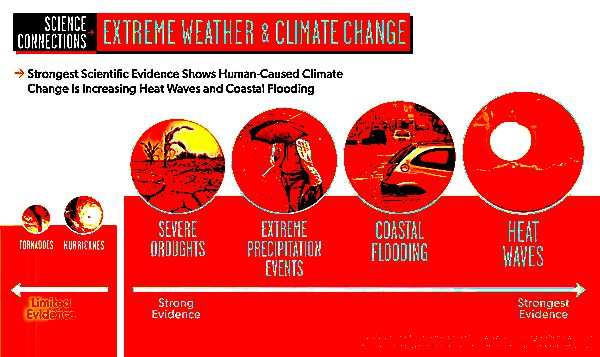
- What’s the connection between global warming and extreme weather? When it comes to heat waves and coastal flooding, the scientific evidence is clear: Human-caused climate change is increasing these extreme weather events.
- Other forms of severe weather are also closely linked to climate change, including a rise in extreme precipitation events in some regions and increasingly severe droughts in others.
- The effect of climate change on tornadoes and hurricanes is an active area of research. Scientific confidence with observed data is currently low, though the underlying mechanisms of climate change are expected to play a role.
Climate change is one of the most devastating problems that humanity has ever faced—and the clock is running out. — Union of Cocerned Scientist
Video: Storm After Storm Is Targeting America — And the Next One Could Be Even Worse
Video: NEWPORT BEACH SLAMMED by RECORD TIDES — 8.4 FEET, Its Highest Ever
Climate Impacts The consequences of climate change are already here Climate change is here, and it’s causing a wide range of impacts that will affect virtually every human on Earth in increasingly severe ways. The magnitude of each impact depends on our collective choices as well as details—e.g., the particular region and the people that live there—but together, the range of impacts makes climate change one of the most urgent issues facing humanity today.
Will it be AI or the climate crisis that ends humanity? We can make it neitherBoth of these threats have the same roots: private entities seeking to cash in. We have the power to stand against them A summer of extreme heat, entire villages obliterated in Nepal, a super El Niño breaking records, Exxon publicly saying we may reach 3C by 2050 – could it possibly be any worse? How about throwing AI extinction in the mix? As climate activists and funders, we’ve spent years warning about a self-evident, imminent, avoidable climate calamity. Whether by making award-winning films (Don’t Look Up and Just Look Up) to warn the public, or by funding protest groups across the planet that bravely stand up for a livable future, we’ve been sounding the alarm to wake the public up. Lately, as climate disasters and AI expansion wreak havoc on communities globally, warnings are arriving from everywhere all at once.
The US subsidizes Global Warming!: Fossil Fuel Accountability Oil, gas, and coal companies share an outsized responsibility for the climate crisis. $37.5 billion annual fossil fuel subsidies The energy business is one of the largest industries in the world. Major fossil fuel companies routinely make billion-dollar profits, extracting and distributing oil, gas, and coal. Unfortunately, fossil fuels produce carbon dioxide (CO2) when burnt—and CO2 is the main driver of climate change. Instead of acknowledging the harmful effects of their products and committing to swift and deep reductions in global warming emissions, many of the world’s largest fossil fuel companies have knowingly deceived the public about the climate science and policy—and they continue to do so today.
Fight the millionaires, not the migrantsRacist pogroms in the North of Ireland, masked men trying to prevent the landing of a small boat in Portsmouth, violent deportation raids by ICE in the US, tens of thousands crossing the Morocco-Spanish border at Ceuta… The question of migration is now at the centre of the political debate in many countries and is a crucial part of the political platform of the populist right wing in ascent. Why is that, and what should the position of communists be on this important question?
Decoder Replay: A flood of migration from climate changeGrowing numbers of people around the world, most of them poor, are being uprooted from their homes due to climate change. But migration can be a sensible way to adapt to the effects of global warming if managed carefully and supported by sound development policies and investments, experts say. Last year, more than 40 million people were uprooted due to conflict and disasters, the highest figure in 10 years, according to the Internal Displacement Monitoring Centre. Disasters, mostly weather-related such as storms, floods and wild fires, triggered more than three times more displacements than conflict and violence in 2020. “Increasingly, we are seeing climate change become an engine of migration, forcing individuals, families and even whole communities to seek more viable and less vulnerable places to live,” former World Bank Chief Executive Officer Kristalina Georgieva said.
This is the hard lesson from Israel’s election: to stop nationalist populists, you can’t play by gentlemen’s rules It’s less an election result than a philosophical puzzle: what happens when a win contains a loss, a loss contains a win and the two collide? That’s the question posed by the confused and confusing outcome of this week’s Israeli election, one that, despite its murky uncertainty, offers clear, sharp lessons – both for that country and for those locked in combat with nationalist populists across the globe. Start with the result that has simultaneously handed Benjamin Netanyahu a devastating defeat and a strong chance of staying on as prime minister, extending a run that has seen him lead Israel, on and off, for more than 19 of the past 30 years. The defeat is clear enough. At a stroke, his parliamentary majority was wiped out. Before Tuesday, the parties that together comprised his ruling coalition controlled 68 of the Knesset’s 120 seats: that tally has now shrunk to just 53, far short of the 61 seats needed for power. That’s a loss in anybody’s language.
Serbia: masses defeat Vučić and sweep Student List to power – what now? The 25 October election marks a qualitative change in Serbia, a political earthquake feeding into the shockwaves reverberating throughout the Balkans.