
Daily News 09/28
Daily News 09/28
Daily News Archives Since June 2026
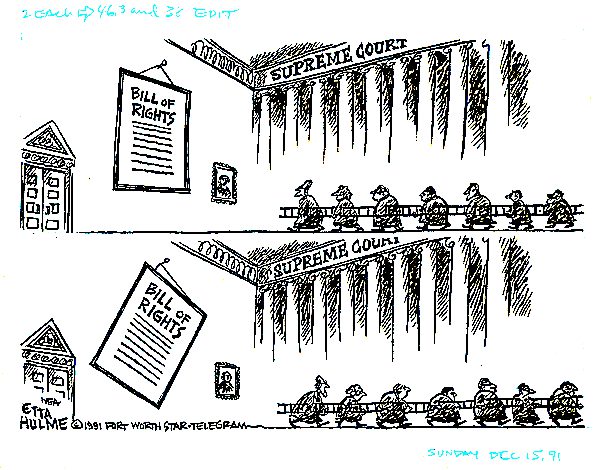
Trump is Going to Try to Stop/Steal the Midterm Elections by Every Means Possible! He Knows that he and this supporters waill lose and honest election! He Knows that he has Been in Constant Violation of the Laws and the Contitution and he knows he will be impeached for those violations! He and his Family’s will lose Pesidential Profiteering Coruptions! In Fact All, Branches of the Government, Should be Impeached for Violations of the Our Bill of Rights!
One system struggles to limit the role of capital. The other cannot function without it. The conclusion follows naturally. The United States does not represent democracy in its highest form. It represents a system where formal equality coexists with real inequality, where participation does not translate into control, and where economic power sets the boundaries of political life. Cuba, despite its difficulties, points in another direction. It demonstrates that political systems can be organized in ways that limit the influence of wealth, expand participation, and orient decision-making toward social needs.A system where money speaks louder than people cannot be considered democratic in any meaningful sense. A system that reduces political choice to selecting between pre-defined options is not freedom—it is managed consent. Real democracy begins at the point where capital loses its power to decide. That is precisely the boundary socialist Cuba has attempted—under pressure, with contradictions, but in practice—to cross. — Why socialist Cuba is more democratic than the U.S
Video: A ‘super’ El Niño is about to crash into California: 9 essential ways to prepareThe pattern could train a stream of potent tropical moisture on Southern California, drenching the region, weather experts have said.
Video: The Climate Speech We’ll Probably Never HearOn the heels of Climate Week, Nate poses a thought experiment: What would a world leader’s speech sound like if the difficult truths underpinning global heating – which are politically unsayable due to donors, borders, electoral campaigns, and other incentives – were laid bare to the public? Posing as this hypothetical world leader, Nate traces modern prosperity back to the extraordinary inheritance of ancient sunlight we discovered in the form of fossil fuels. Their extraction and depletion have made today’s civilization possible, while simultaneously bringing forth dire consequences for Earth. He also outlines the deeper behavioral and cultural ways in which billions of individual choices become a system with its own logic and behavior, producing outcomes that no one person intended … or can control.
Video: Donald Trump and the Age of Evil – The Chris Hedges ReportDonald Trump exhibits the classic traits of psychopaths — superficial charm, grandiosity and self-importance, a need for constant stimulation, a penchant for lying, deception and manipulation and incapacity for remorse or guilt. But is he evil? If, as the philosopher Susan Nieman writes, evil is not simply the opposite of good but inimical to it, if the aim of evil is to destroy all moral distinctions, then Trump qualifies as evil. Morality, for Trump, is for losers. All life is transactional. Self-interest and self-enrichment usurp all other considerations. No one else matters.
Capitalism Will Not Solve the Environmental Crisis The environmental crisis is one of the greatest challenges we face today. At its root lie the capitalist mode of production and the logic of capital accumulation pursued by the ruling classes of the Global North and South. The devastation wrought by capitalism is plain for all to see, as climate change intensifies and accelerates year after year, threatening the very existence of humanity. As Fidel Castro warned in his speech at the 1992 UN Conference on Environment and Development in Rio de Janeiro, ‘An important biological species is in danger of disappearing due to the rapid and progressive liquidation of its natural living conditions: humanity’. 1 … A Minimum Agenda to Confront the Environmental Crisis Brazil’s popular movements understand the need to wage struggles on multiple fronts. Despite the limits of the COPs and the negotiations held there, popular movements recognise that it is essential to pressure their governments to secure a minimum agenda that holds the social classes and countries most responsible for pollution accountable and combats the climate catastrophe driven by capitalism. In this spirit, working alongside the MST, we created an agenda to confront the environmental crisis:
Compliance with and Advancement of International Agreements
- Building on the agreements of the 1992 United Nations Conference on Environment and Development, which established the principle of ‘common but differentiated responsibilities’, compel Global North countries – which bear historical responsibility for the climate crisis – to rapidly cut their carbon emissions and prevent global temperatures from rising above the critical 1.5°C threshold.
- Ensure that Global North countries provide climate compensation to Global South countries for the losses and damages caused by their carbon emissions and provide substantial funding for public infrastructure to replace reliance on carbon-based energy.
- Fulfil the Paris Agreement pledge that Global North countries provide $100 billion annually to meet the needs of Global South countries, particularly for policies that mitigate the real and disastrous impacts of climate change that they are already experiencing (especially low-lying nations and small island states). These resources must come in the form of grants directly transferred to subnational projects for forest protection and restoration. Since loans are not transfers of resources, they should not be considered to fit within the scope of the Paris Agreement, though this has often been the case. These funds should serve as instruments of climate justice, not as pretexts for financial sector profit obtained through private or multilateral development banks.
- Transfer technology and financing to Global South countries to phase out carbon-based energy systems and build alternatives based on sovereign national strategies.
- Hold Global North countries accountable for polluting water, soil, and air with toxic and hazardous waste – including nuclear waste – such as by making them bear the costs of cleanup and by prohibiting technologies and modes of production that generate such waste.
World Health Organization Global HW Public Health Situation Analysis El Niño 2026 Implications for Public Health and Early Action Overview This document has been developed to support countries in preparing for, anticipating, and responding to El Niño health impacts. It aims to provide a support to country- and regionspecific risk analyses, to inform planning and support connections between risk and operational tools. The purpose of this document is thus to advocate for awareness and the importance of early action. The document is not intended to be standalone operational guidance. Updates can be expected as the situation evolves. This event arrives at a time of particular concern, with numerous compounding risk factors increasing global vulnerability to health emergencies includingi :
• A warming world and record global temperatures, • Severe humanitarian funding constraints, • Global economic shocks and rising prices and disruption in liquefied natural gas and fertilizer supply chains, • Preexisting acute food insecurity across multiple regions, • Multiple conflicts globally generating food insecurity and displacement, • An Ebola outbreak in the Democratic Republic of the Congo also impacting neighbouring countries, all of whom are at risk from El Niño-driven changes, and • Increasing incidences of diseases in some regions (such as cholera or dengue) that are sensitive to changes in climate.
Trump allies could use midterms ‘counting window’ to disrupt results, experts warn
Mazars and Vance, and President Trump’s Ongoing Assault on our Structural Constitution It’s no secret that President Donald J. Trump has waged a brazen and relentless assault on our constitutional structures of government. Indeed, he may be the first to say so. From his open attacks on the “deep state” to his public disparagement of sitting federal judges to his division of the nation into (favored) “red states” and (disfavored) “blue states,” President Trump wears his constant attacks on the structures of government as a badge of honor. And he uses those attacks as red meat for his political base. But President Trump’s assault on our constitutional structures extends well beyond his rhetoric. The examples are legion, but here are just a few: He has misused the military for his own domestic political purposes. He has illegally reprogrammed federal funds to achieve his own policy objectives. He has politicized independent agencies for his own ends. He has openly violated federal law, most notably in the areas of immigration and environmental protection. He has strong-armed state and local governments to fall in line with his priorities by threatening, without statutory authorization, to withhold federal funds. The list could go on and on.
Iranian American Organization Sues Trump to Demand End to War on Iran “Billions have been taken out of our pockets to wage an illegal war that has no end in sight,” one advocate said.
The Movement to Abolish ICE Is Gaining Momentum As activists rally around federal legislation to dismantle ICE, Amnesty International joins the call for abolition.
US Citizens ‘Could Lose Their Right to Vote’ After Supreme Court Gives Green Light to Trump’s Voter Purge Database“The SAVE database has known errors, including incorrectly flagging numerous eligible citizens… as noncitizens,” an election security expert told Common Dreams.
‘The weaker he gets, the more dangerous he gets’: Trump lashes out as his power wanes
Genocide is Profitable. If It Wasn’t, It Would Not Exist: UN adds 61 firms to settlements blacklist over alleged human rights violations against Palestinians Israel ‘categorically rejects’ publication and says businesses on database have committed no wrongdoing The UN human rights office has added 61 more companies to a blacklist of firms that it says are involved in violating Palestinian human rights through business ties to Israeli settlements in the occupied West Bank. The vast majority of the total 214 companies, which are based in 11 countries, are Israeli. Five of the 158 companies listed last year were removed in the latest update. The 1%’s Attack Upon the 99%:
Around the country, decisions made by federal judges have an enormous impact on the affordability crisis. Those decisions usually don’t make headlines. But their importance shouldn’t be overlooked. For instance, job security is critical to being able to make ends meet. That means not just having a job, but having one that pays well, has good benefits, and has meaningful protections from workplace hazards, discrimination, and being fired unfairly. Over the years, Congress has passed a lot of laws to make that possible. But far-right judges — especially ones nominated by President Trump — have been sabotaging those laws. And the impact of their decisions affects millions of people, not just the parties involved in the case. — Trump Judges Are Making the Affordability Crisis Worse
Pew Reasearch Center; For most U.S. workers, real wages have barely budged in decades On the face of it, these should be heady times for American workers. U.S. unemployment is as low as it’s been in nearly two decades (3.9% as of July) and the nation’s private-sector employers have been adding jobs for 101 straight months – 19.5 million since the Great Recession-related cuts finally abated in early 2010, and 1.5 million just since the beginning of the year. But despite the strong labor market, wage growth has lagged economists’ expectations. In fact, despite some ups and downs over the past several decades, today’s real average wage (that is, the wage after accounting for inflation) has about the same purchasing power it did 40 years ago. And what wage gains there have been have mostly flowed to the highest-paid tier of workers.
On the Economic Crisis of CapitalismThere are at least two important economic aspects of the current structural crisis of capitalism. The first is the overall stagnation and increased unemployment with which world capitalism in its neoliberal phase has been confronted. The higher unemployment in many cases, such as in the United States, is camouflaged by a reduction in the work participation rate, but its reality is undeniable. The stagnation was manifest even before the pandemic: the decadal rate of growth of the world economy over the 2010s decade was lower than in any preceding decade since the Second World War. Rising Share of Surplus and Ex Ante Overproduction The reason for this stagnation lies in the very nature of neoliberal capitalism itself, which has seen a massive increase in income and wealth inequality within each country. Since capital, including finance, enjoys more or less free global mobility under the neoliberal regime, while workers remain confined to their respective countries (except when specifically permitted to migrate), workers in advanced countries in effect compete against the lower-wage workers of the Global South, to which capital can always be relocated. As a result, advanced-country workers experience scarcely any increase in their real wages even in absolute terms: in fact, Joseph Stiglitz estimated the average real wage of a male American worker in 2011 to have been marginally lower than in 1968.1 At the same time, notwithstanding whatever relocation of activity occurs from the North to the South, the large labor reserves of the South—a legacy of its colonial past—do not get exhausted. On the contrary, they increase relative to the workforce, because of the substantial increase in labor productivity that occurs everywhere owing to the adoption of more rapid technological change, the latter a fallout of the intensification of competition in the world market under the neoliberal dispensation. The non-diminution in the relative size of labor reserves implies that real wages in the Global South remain more or less tied to a subsistence level. Thus, in both the North and the South the vector of real wages scarcely increases, even as labor productivity rises apace, giving rise to an increase in the share of economic surplus in world output and as well as within individual countries.2 Since a larger proportion of income on average is consumed by working people than by those who live off the economic surplus, a rise in the share of economic surplus has the effect of keeping down consumption demand and hence aggregate demand relative to producible output. This in turn gives rise to an ex ante tendency toward overproduction, of which the actually observed stagnation and increased unemployment are manifestations.3 … The fact that recolonization by imperialism will not be easy is demonstrated by what is happening in Iran. In fact, the resistance in Iran has come as a great surprise for U.S. imperialism. If Iran had crumbled easily, then imperialism would have been emboldened to pursue its recolonization project with even greater vigor and alacrity, and other countries in the Global South would have felt enfeebled in their anti-imperialist struggle. There is, in other words, a dialectics of resistance, where one country’s stout resistance strengthens the will to resist by other countries; there is also a dialectics of enfeeblement, where one country’s feeble response to imperialist recolonization serves to discourage other countries. The intrepid struggle put up by Iran is an invigorating force for the Global South as a whole. Imperialism of course would not abandon its agenda for recolonizing the Global South because of Iran’s resistance, but it would be certainly slowed down in pursuing its agenda.