
Daily News 10/01
Daily News 10/01
Daily News Archives Since June 2026
My Daily News 09/30 Digest Dealt With Food Insecurity and Hunger, Today’s Digest Deals with Homeless and Housing
Headline: Supreme Court Approves Criminalization of Homelessness
Capitalism Has Never Provided Food and Shelter for All!
It is perfectly clear that the existing state is neither able nor willing to do anything to remedy the housing difficulty. The state is nothing but the organized collective power of the possessing classes, the landowners and the capitalists as against the exploited classes, the peasants and the workers. What the individual capitalists (and it is here only a question of these because in this matter the landowner who is also concerned acts primarily as a capitalist) do not want, their state also does not want. If therefore the individual capitalists deplore the housing shortage, but can hardly be persuaded even superficially to palliate its most terrifying consequences, then the collective capitalist, the state, will not do much more. At the most it will see to it that the measure of superficial palliation which has become standard is carried out everywhere uniformly. And we have already seen that this is the case. ― 1872 Friedrich Engels, The Housing Questionhttps://www.goodreads.com/work/quotes/1526038-zur-wohnungsfrage
There Is No Place For Us: Capitalism, Homelessness, And The Political Economy Of Misery
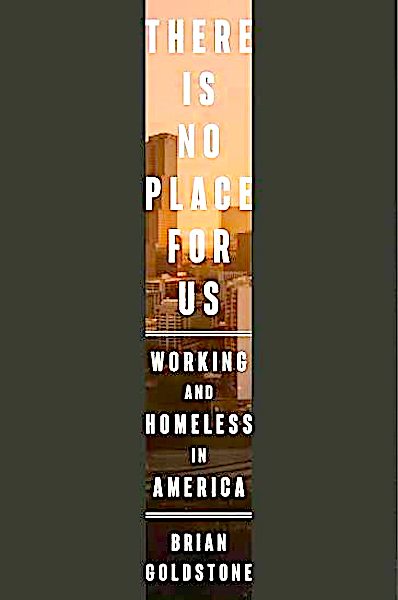
Introduction: A Portrait of a System in Collapse Brian Goldstone’s There Is No Place for Us comes at a time when the United States—the wealthiest capitalist country in history—is facing social suffering on a scale that would have been unimaginable a generation ago. Homelessness has reached historic highs, rent prices are climbing much faster than wages, and many workers, even with one or two jobs, are on the verge of eviction, displacement, and poverty. Goldstone’s book, awarded the 2026 Pulitzer Prize for General Nonfiction, is a compelling piece of investigative journalism. It explores five working-class families in Atlanta who are caught in the cycle of homelessness. The strength of the book comes from its detailed, personal portrayal of how a system that views housing as a commodity—rather than a social right—acts as a tool for speculation and profits off the most vulnerable. “The book’s most devastating revelation is that homelessness is not a breakdown of the system — it is a business model.” Goldstone reveals a fundamental truth, even if he doesn’t fully articulate its political implications. The suffering of homeless people isn’t accidental, due to personal failings, or merely because of bureaucratic errors. Instead, it is an expected consequence of a capitalist system where all human needs are sacrificed for the profit goals of the financial elite.
World Cities Report 2026: The Global Housing Crisis: Pathways to Action The current global housing crisis is the outcome of decades of insufficient investment, rapid urbanization, economic instability, and displacement caused by conflict and disasters. Recent global estimates indicate that up to 3.4 billion people lack access to secure, safe, and adequate housing, including more than 1 billion people living in informal settlements and slums under conditions characterized by insecure tenure, overcrowding, exposure to environmental hazards, and limited access to basic services. Despite the universal recognition of housing as a human right, progress remains inadequate. Global housing deficits increased from 251 million units in 2010 to 288 million in 2023, while forced displacement continues to rise due to conflict, violence, human rights violations, and climate-related disasters. Research conducted by UN-Habitat estimates that approximately 64 million people were evicted globally between 2003 and 2023, with severe consequences for livelihoods, security, and social well-being. The World Cities Report 2026 highlights adequate housing as a fundamental pillar of sustainable urban development and human well-being, extending far beyond the provision of shelter. Housing influences access to employment, public services, health, and economic opportunity, making it central to achieving the Sustainable Development Goals (SDGs). The report highlights the importance of safe, affordable, and well-located housing in reducing poverty, improving quality of life, and transforming informal settlements and slums. The report also positions housing as a critical driver of climate action and urban resilience, noting the need for energy-efficient, low-carbon housing solutions and resilient urban infrastructure. It calls for inclusive and participatory approaches that support community-led upgrading initiatives and recognize informal settlements as integral parts of cities. Ultimately, the report urges governments and stakeholders to recommit to housing as a human right and a foundation for greener, more equitable, and resilient urban futures.
Homelessness Statistics in the World: Causes and Facts Of the 8.2 billion people currently living on planet Earth, a significant percentage is homeless. This is why in almost every city on the planet, people can be observed sleeping on the streets, on park benches or elsewhere they possibly can. Homelessness is not a personal choice, and it affects people of all ages, sexes, races, and backgrounds. It is among the most obvious examples of poverty, prejudice, and inequality. Although hard to track, the number of homeless people increases every year, with few countries being an exception. Homelessness statistics at a glance Although the world has millions of homeless people, it is challenging to quantify homelessness with any degree of accuracy due to the lack of reliable statistics. Numerous factors contribute to the phenomenon, many of which are interconnected.
- Conflicts cause people to lose their homes and look for a place to stay, but not everyone is lucky enough to find adequate shelter
- lth issues.
- Despite having a job, some homeless people do not earn enough to be able to cover their rent, sometimes as a result of an increase in local housing costs.
- Virtually every country around the globe has a homeless population. From this perspective, nations can be divided into two categories: those with the highest homeless population, and those with the highest homeless rate.
- Natural disasters destroy homes, leaving families without a roof over their heads
- The absence of affordable housing is another major cause. Some people are unable to pay their rent or mortgage due to unemployment, which can be caused by a crisis or by physical or mental hea
Virtually every country around the globe has a homeless population. From this perspective, nations can be divided into two categories: those with the highest homeless population, and those with the highest homeless rate.
Spain: violent eviction leads to explosion of anger over housing Over the last week, the name Maricarmen has taken over headlines in Spain. This 87-year-old disabled woman had been living in her Madrid apartment for 71 years until her brutal eviction last wee There has been an outpouring of sympathy for this innocent woman and her steadfast struggle against a predatory investment fund. It has catalysed the deep anger and frustration that has been accumulating for several years in Spanish society as a result of the ongoing housing crisis.With Madrid’s central plaza, Puerta del Sol, now occupied by a campout, the government of Pedro Sánchez is scrambling to pass some measure to quiet down the movement.

The Housing Shortage Is a Major Driver of Poverty New research identifies states where solving the housing shortage would significantly reduce poverty Housing costs are usually the largest item in a household’s budget and can determine a family’s financial stability. In the United States, a housing shortage estimated at 4 million to 7 million homes has driven rents so far above historical norms that these costs have become a significant cause of poverty. Zachary Parolin, a professor at the University of Oxford in England, examined 2023 housing costs in the U.S. and identified the states (counting Washington, D.C., among them) where the greatest share of poverty is attributable to high rent. They are Hawaii, California, D.C., New Jersey, Massachusetts, Colorado, Maryland, Connecticut, New York, and New Hampshire.
Capitalism Can’t Get the Lead Out!: The toxic truth Children’s exposure to lead pollution undermines a generation of future potential Around 1 in 3 children – up to 800 million globally – has blood lead levels at or above 5 micrograms per decilitre (µg/dL), a level that the World Health Organization and the United States Centers for Disease Control and Prevention have stated it requires global and regional interventions. This joint report by UNICEF and Pure Earth notes that lead is a potent neurotoxin that causes irreparable harm to children’s brains. It is particularly destructive to babies and children under the age of 5 as it damages their brain before they have had the opportunity to fully develop, causing them lifelong neurological, cognitive and physical impairment. Childhood lead exposure has also been linked to mental health and behavioural problems and an increase in crime and violence. Older children suffer severe consequences, including increased risk of kidney damage and cardiovascular diseases in later life, the report says.
NASA: Is it too late to prevent climate change? Humans have caused major climate changes to happen already, and we have set in motion more changes still. However, if we stopped emitting greenhouse gases today, the rise in global temperatures would begin to flatten within a few years. Temperatures would then plateau but remain well-elevated for many, many centuries. There is a time lag between what we do and when we feel it, but that lag is less than a decade. While the effects of human activities on Earth’s climate to date are irreversible on the timescale of humans alive today, every little bit of avoided future temperature increases results in less warming that would otherwise persist for essentially forever. The benefits of reduced greenhouse gas emissions occur on the same timescale as the political decisions that lead to those reductions. Without major action to reduce emissions, global temperature is on track to rise by 2.5°C to 4.5°C (4.5°F to 8°F) by 2100, according to the latest estimates. But it may not be too late to avoid or limit some of the worst effects of climate change. Responding to climate change will involve a two-tier approach:
- “Mitigation” – reducing the flow of greenhouse gases into the atmosphere
- “Adaptation” – learning to live with, and adapt to, the climate change that has already been set in motion. The key question is, what will our emissions of carbon dioxide and other pollutants be in the years to come?
World’s oceans absorbed record heat equal to 40 times annual global energy useThe injection of thermal energy comes amid an increasing rise in sea levels and continuing acidification ]
Antarctic winter sea ice falls to third-lowest level on record as scientists warn of ‘now problem’Coverage levels fall a million square kilometres short of the long-term average, with global heating likely driving losses
It’s the dying days of an empire “We’re standing there with our eyes closed getting punched in the face.” That’s how one active-duty US serviceman described the Iran war. After months of downplaying or ignoring the widespread damage and destruction of American bases in the Middle East, the mainstream media has now published photos of bombed-out buildings and barracks. As the serviceman, who spoke to CBS last month, put it, “This is major damage to our bases that hasn’t been communicated to the American public … We’re not defending these bases. We’re just watching them get destroyed.” Indeed, the whole world is watching the decline of US imperialism in real time.
Supreme Court OKs Third-Country Deportations—For Now—Despite ‘Cascade of Human Rights Violations’
‘It’s just cruel’: US households hit by surge in electricity shutoffs amid record hot summer
Utility disconnections were up 28% in 10 states in July 2026 – the hottest month ever recorded in the US – compared with July 2024, data show