
The United States Iran War for Oil
The United States Iran War for Oil!
By Roland Sheppard

By Roland Sheppard
Trumps stated reason for the Iraq was he did’t want Iran to have the nuclear bomb. That ‘reason’ is false! This proven by this quote, before Trump order the bombing of an Iranian schoolhouse!.:
Last Friday the mediator of the U.S. and Iranian nuclear negotiations in Oman, that country’s foreign minister Badr Albusaidi, pulled the rug out from President Trump’s deceptive pretense threatening war with Iran. Why? Because it had refused his demands to give up what he claimed was its own atom bomb. The Omani foreign minister explained on CBS’s Face the Nation that the Iranian team had agreed not to accumulate enriched uranium and offered “full and comprehensive verification by the IAEA.” This new concession was a “breakthrough that has never been achieved any time before. And I think if we can capture that and build on it, I think a deal is within our reach” to achieve “agreement that Iran will never, ever have a nuclear material that will create a bomb. This is, I think, a big achievement.” — Negotiation to Detonation
Now he dtates he will keep bombing till Iran surrenders! What doe he want iran to surrender? He wants Iran to surrender it’s oil fieds to the US oil corporations. The same reason why he arrest Manduro in Venezuela.
Unlike Venezuela Iran defended itself.
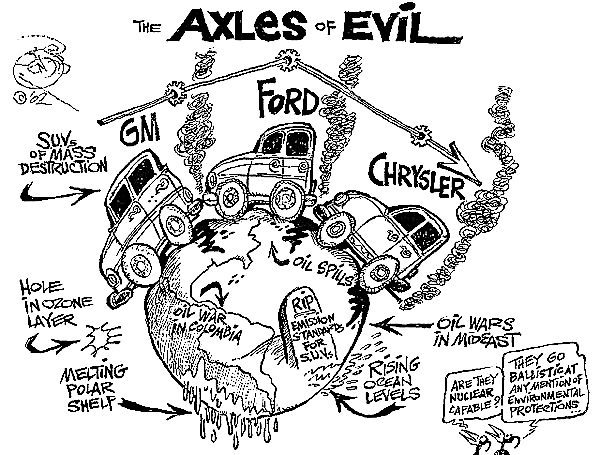
In todays’s world the United States is violating nation and internation laws for its’ constant war for oil at he expense of the environment!
Iran War Background — OIl Corporations Want Iran’s Oil and Trump Obayed: The Iranian Oil Grab how the international oil cartel carved up the oil resources of Iran after the overthrow of Mossadegh. A full account of a little-known story by an expert in the oil-industry field. By Harvey O’Connor (1955) Iran Announces Nationalization of Foreign Oil Interests. On March 16, 1973, Iran’s Shah, Mohammad Reza Shah Pahlavi, announced a significant shift in the country’s oil management, declaring the nationalization of foreign oil interests. This move transitioned foreign oil companies from producers to customers of Iranian oil, with the National Iranian Oil Company (NIOC) assuming control of production and refining facilities starting March 20. The announcement followed the St. Moritz Agreement, which modified earlier arrangements from 1954 to enhance Iran’s control over its oil resources, ensuring higher production capacity and prices comparable to other Persian Gulf producers. Nationalization reflected a broader trend among oil-exporting countries aiming for greater sovereignty over their resources, particularly in the context of rising tensions in the region, exemplified by the Arab-Israeli conflict and Iraq’s nationalization of U.S. interests. The repercussions of Iran’s nationalization contributed to the oil crises of the 1970s, affecting global oil prices, consumer economies, and international relations. This period marked a pivotal moment in the power dynamics between oil-exporting nations and international oil companies, leading to a long-lasting impact on energy policies worldwide.